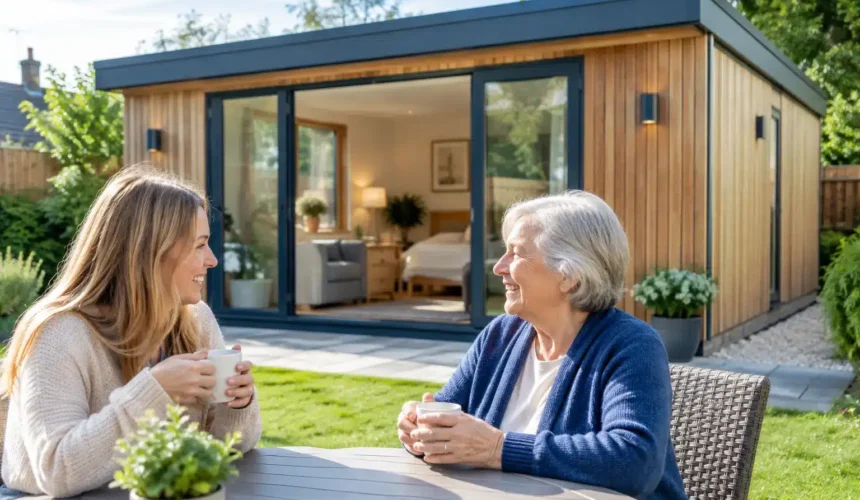
A granny annexe is often prompted by a family decision rather than a property ambition. A parent may need to be closer without giving up privacy, or a household may want room for care, support and independence under one roofline – without actually sharing the same roof. Working out how to finance a granny annexe is therefore about more than finding the lowest monthly repayment. It is about creating a durable, compliant living space that works for your family now and remains an asset to the property later.
The right route depends on your equity, income, wider borrowing position and the type of annexe you intend to build. A modest garden room with occasional sleeping space is a different proposition from a fully insulated, self-contained timber annexe designed for year-round occupation. Treating both as the same project can lead to a funding shortfall before construction has even begun.
Start with the full cost of the annexe
Before approaching a lender, establish a realistic project budget. The building itself is only one part of the investment. A permanent granny annexe may also require surveys, architectural design, planning support, building regulations input, groundworks, drainage, utility connections, access works and interior fit-out.
For a self-contained annexe, kitchens and bathrooms can have a meaningful effect on cost, particularly where new water, waste and electrical runs are needed. Site conditions matter too. Sloping gardens, restricted access and poor ground can all influence the groundwork specification and programme.
A well-prepared budget should include a contingency. This is not a sign of uncertainty or poor planning. It is sensible provision for conditions that only become clear once groundworks begin, or for choices made during the detailed design stage. Funding the project to its absolute limit can force compromises in insulation, windows, finishes or services – the very elements that determine how well the building performs over time.
The main ways to finance a granny annexe
Savings and phased investment
Using savings avoids interest charges and keeps the project free from lender conditions. For homeowners with sufficient capital, it can be the cleanest route, especially when the annexe is part of a longer-term family plan.
The trade-off is liquidity. It is rarely wise to commit every available reserve to a build, however desirable the outcome. Keep an emergency fund separate, and allow for the cost of furnishing and settling into the completed space. A fully built annexe that has no budget left for appliances, flooring or landscaping is not truly finished.
Some clients choose to combine savings with borrowing. This can reduce the amount financed while preserving a sensible cash buffer.
Remortgaging to release equity
For many established homeowners, remortgaging is the most practical way to finance a granny annexe. If the home has risen in value or a substantial portion of the mortgage has been repaid, releasing equity may offer a lower interest rate than unsecured borrowing.
However, the headline rate is not the whole calculation. Extending borrowing over a long mortgage term can make monthly payments manageable but increase the total interest paid. Early repayment charges on an existing deal, arrangement fees and valuation costs should also be considered. A mortgage adviser can assess whether a full remortgage, a further advance from your current lender or a product transfer is the better fit.
Lenders will look at affordability, loan-to-value and the purpose of the borrowing. Be clear that the funds are for a permanent residential-quality annexe, supported by a defined scope and professional costings. Detailed plans and a credible build partner can make the conversation far easier than a vague estimate for a ‘garden building’.
Further advance or secured home improvement loan
A further advance allows you to borrow additional funds from your existing mortgage lender, secured against the property. It can be useful where your current mortgage rate is favourable and you do not want to refinance the entire balance.
A secured home improvement loan is another option, sometimes suited to projects that sit outside the appetite or criteria of a mainstream mortgage lender. Rates and fees can vary considerably, so compare the total payable amount rather than focusing solely on the initial monthly figure. As with any borrowing secured on your home, take independent financial advice before proceeding.
Personal loans and short-term borrowing
An unsecured personal loan may suit a smaller project or a defined portion of the works, such as the internal fit-out. It is generally quicker to arrange and does not place a legal charge on the property. The repayment period is usually shorter, though, which can mean significantly higher monthly payments.
Credit cards and short-term promotional finance deserve particular caution for a construction project. Timelines can change, and a promotional rate may expire before the final invoice is paid. These products are better treated as a carefully managed supplement, not the primary foundation of an annexe budget.
Equity release for later-life homeowners
Where the homeowner is older and has substantial property equity, equity release may be considered. It can provide capital without requiring regular monthly repayments, depending on the product. Yet compound interest can grow quickly, reducing the value of an estate over time.
This route is not right for every family and should only be explored with specialist, regulated advice. It is particularly important to discuss how the arrangement may affect inheritance, future care planning and eligibility for means-tested support.
Finance a granny annexe with planning in mind
Funding and planning are closely connected. Do not assume that a freestanding building can be occupied as independent accommodation simply because it sits within your garden. The intended use, degree of self-containment, relationship to the main house and local planning policy can all affect what permissions are needed.
A lender may not ask to see every planning detail, but you should have clarity before committing funds or signing a build contract. Planning delays can affect when you need the money, while amendments to a design can change the cost. A full-service design-and-build process helps align the layout, specification, regulations and budget from the beginning rather than treating them as separate problems.
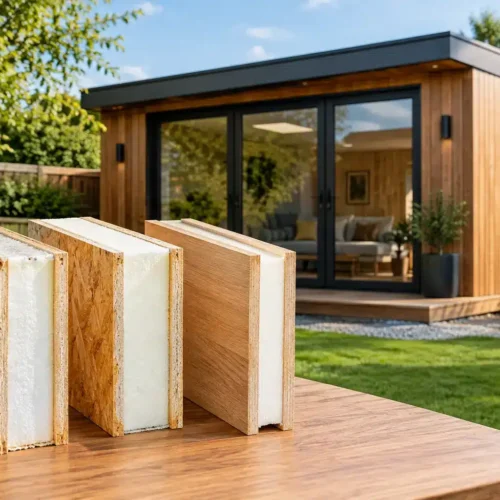
For a granny annexe intended for full-time use, build quality is central to financial value. A structure designed to recognised residential standards, with high-performing insulation, dependable ventilation, quality glazing and properly engineered foundations, will cost more than a basic seasonal cabin. It should also deliver better comfort, lower running costs and greater confidence in the building’s lifespan.
Avoid the false economy of a low initial price
The least expensive quotation can be expensive in another way. Low figures sometimes omit groundwork allowances, service connections, internal finishes or the professional coordination needed to deliver a compliant project. Others may be based on lightweight construction unsuitable for all-season living.
Ask every prospective supplier what is included, who manages each stage and what standard the completed annexe is designed to meet. A clear specification should cover the timber frame, insulation build-up, roof, windows, heating, electrical installation, plumbing, kitchen, bathroom and external works. It should also explain who is responsible for site preparation, approvals and final sign-off.
This is where a bespoke timber annexe differs fundamentally from a catalogue purchase. With Stomhaus, the objective is not simply to place a building in a garden. It is to create a tailored, permanent space engineered around the site, the family’s needs and the expected level of occupation.
Consider the value beyond resale
Homeowners understandably ask whether an annexe will add value to their property. The honest answer is that it depends. Location, plot size, planning status, construction quality and the needs of local buyers all matter. A beautifully designed annexe may broaden a property’s appeal, but no builder should promise a fixed uplift in value.
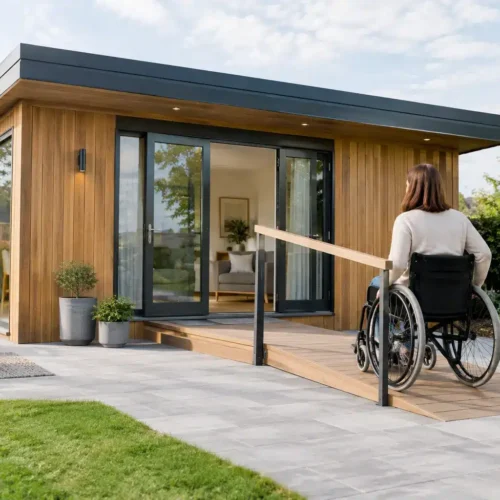
Its immediate value is often more personal. It can delay or avoid the need for alternative accommodation, make shared care more practical and allow an older relative to retain dignity and autonomy. It may later become a guest suite, workspace or accommodation for an adult child, provided its use remains appropriate to the permissions in place.
Build the finance plan around that long view. Choose a repayment structure you can comfortably sustain, retain a contingency, and invest in a specification that will still feel right after the first winter. A granny annexe should give your family more options, not create a financial burden that narrows them.